Understanding Your Vehicle Customization Options
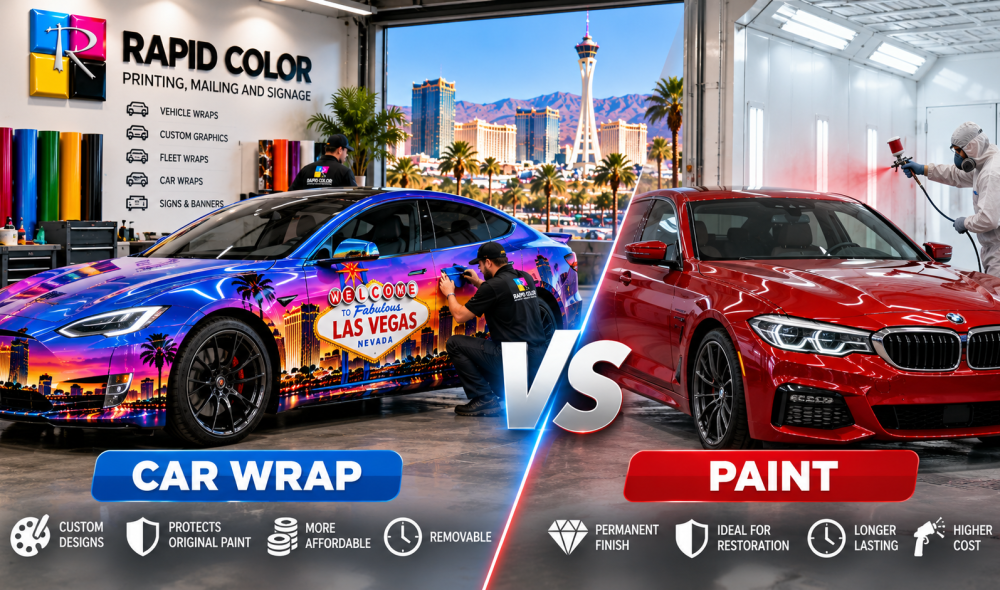
Changing your vehicle’s appearance involves more than selecting a new color. You also need to consider cost, maintenance, durability, and how long you want the change to last. When comparing a car wrap vs paint, the right choice depends on your vehicle’s condition, your design preferences, and your long-term goals. Drivers exploring a vehicle wrap in Las Vegas can consider vinyl graphics for customization, while traditional automotive paint remains a strong option for permanent color changes and restoration.
Las Vegas presents additional considerations. Strong sunlight, high summer temperatures, and dust can affect a vehicle’s exterior over time. Neither vinyl nor paint is maintenance-free, and the results depend on material quality, surface preparation, installation, and care.
This guide explains the practical differences between wrapping and painting a vehicle so you can make an informed decision without relying on unrealistic cost or durability promises.
What Is the Difference Between a Car Wrap and Traditional Paint?
How Does a Car Wrap Work?
A car wrap uses specialized vinyl film applied over a vehicle’s existing painted surface. Depending on the material and design, it can change the vehicle’s color, add graphics, or create a distinctive finish.
Available options may include gloss, matte, satin, metallic, and custom printed designs. Full wraps cover most painted exterior panels, while partial wraps focus on selected areas. Businesses can also use branded graphics to display a company name, logo, website, or contact details.
One advantage of a wrap is that it can usually be removed without repainting the entire vehicle, provided the underlying paint is suitable and removal is performed correctly. However, vinyl is not a repair solution for peeling paint, rust, or significant body damage.
How Does Traditional Car Painting Work?
Automotive painting involves preparing the vehicle’s surface, applying primer when required, spraying the selected paint, and finishing with a suitable clear coat when the paint system calls for it.
Paint is generally the better choice when the original finish is badly damaged, the vehicle requires restoration, or the owner wants a permanent color change. A quality paint job can produce a deep, consistent finish, but the outcome depends on preparation, materials, application, and curing.
When deciding between a car wrap vs paint, first identify whether you want to change the vehicle’s appearance or correct problems with the existing finish. That distinction can narrow your options considerably.
How Much Does a Car Wrap Cost Compared With Paint?
Factors That Affect Car Wrap Pricing
The cost of a wrap depends on several variables rather than one fixed price. Vehicle size, the number of panels covered, vinyl quality, finish selection, design complexity, and installation requirements all influence the estimate.
A compact car with a straightforward color-change design may cost less than a large SUV with complex curves or a custom printed design. Removing an old wrap, correcting surface issues, and preparing the vehicle can add to the total.
For an accurate estimate, request a quote based on your vehicle’s make, model, condition, and intended coverage. Treat general online prices as estimates, not guaranteed local rates.
Factors That Affect Automotive Paint Costs
Paint pricing depends on the condition of the existing finish, the amount of bodywork required, the paint system, the chosen color, and the quality of the final finish.
A basic repaint and a premium custom paint job are very different projects. Rust repair, dent removal, extensive sanding, and complex finishes can substantially increase the cost. The work may also involve additional labor and curing time.
When comparing a car wrap vs paint, evaluate the complete project cost rather than the advertised starting price. Ask what preparation, materials, finishing, removal, and warranty coverage are included.
Which Option Lasts Longer in Las Vegas Weather?
Car Wrap Durability in Desert Conditions
Vinyl wraps can perform well in Las Vegas when suitable materials are installed correctly and maintained according to the manufacturer’s recommendations. However, intense sunlight, heat, prolonged outdoor parking, and neglected cleaning can accelerate fading or deterioration.
The lifespan varies by vinyl type, exposure, installation quality, and maintenance. Some professionally installed wraps can last several years, but no single lifespan applies to every vehicle or material.
To help maintain a wrap, wash it with suitable products, remove contaminants promptly, and park in a garage or shaded area when practical. Follow the installer’s advice for cleaning, pressure washing, and care around seams and edges.
Paint Durability Under Strong Sunlight
Automotive paint can remain attractive for many years when properly applied and maintained. However, prolonged UV exposure, environmental contaminants, and neglected maintenance can contribute to fading, oxidation, or clear-coat deterioration.
Regular washing, appropriate protective products, and prompt attention to chips can help preserve the finish. Ceramic coatings may provide additional surface protection, but they do not eliminate the need for maintenance or prevent every form of damage.
The practical difference in a car wrap vs paint comparison is that vinyl may need replacement after years of exposure, while paint may require polishing, localized repairs, or refinishing depending on its condition.
What Maintenance Does Each Option Require?
Caring for a Wrapped Vehicle
A wrapped vehicle generally needs gentle, regular cleaning. Hand washing with a wrap-compatible cleaning solution helps remove dust, road grime, and other contaminants without unnecessarily stressing the film.
Avoid abrasive brushes and aggressive cleaning methods. If using a pressure washer, follow the installer’s guidance regarding pressure, distance, and nozzle angle. Pay particular attention to edges and seams.
Inspect the vinyl periodically for lifting, cracking, or discoloration. Addressing small problems early may help prevent further deterioration.
Maintaining a Painted Vehicle
Painted surfaces also require regular washing and protection. Suitable waxes, sealants, or ceramic coatings can help maintain appearance, depending on the paint condition and the product used.
Bird droppings, tree sap, and other contaminants should be removed promptly because they can damage the finish if left in place. Small chips and scratches should be assessed before they expose underlying material to further deterioration.
Neither option eliminates maintenance. The better choice depends on the care routine you prefer and the condition you want your vehicle to maintain.
Which Option Offers Better Customization?
Design Flexibility With Vinyl Wraps
A wrap offers considerable flexibility for changing a vehicle’s appearance without permanently repainting it. Owners can choose distinctive finishes, contrasting roof colors, custom graphics, or partial coverage.
For businesses, wraps can also turn company vehicles into branded mobile advertising. A well-planned design can display essential information while maintaining readability on the road. For more ideas, explore Rapid Color’s guide to vehicle wraps in Las Vegas.
The final appearance still depends on the vinyl, artwork, vehicle shape, and installation. Complex curves, deep recesses, and damaged surfaces may affect how well a design performs.
Design Possibilities With Automotive Paint
Paint offers a permanent finish with options ranging from standard solid colors to metallic, pearlescent, and custom finishes. Skilled automotive painters can also create detailed artwork and distinctive effects.
However, complex paint designs may require specialized preparation and substantial labor. Changing the color again usually means undertaking another paint project rather than simply removing a film.
When evaluating a car wrap vs paint, consider how often you expect to change the appearance. A wrap may suit someone who values flexibility, while paint can be more appropriate for a long-term finish.
How Do Wrapping and Painting Affect Resale Value?
Potential Benefits of a Wrap
A removable wrap can help preserve the appearance of the underlying paint when the original finish is in good condition and the film is properly installed and removed. This can be useful for owners who want a temporary color change or custom graphics.
However, a wrap does not guarantee a higher resale value. Poor installation, neglected maintenance, damaged vinyl, or pre-existing paint problems can complicate removal and affect the vehicle’s presentation.
Before selling a wrapped vehicle, consider whether removal or leaving the wrap in place would make the vehicle more appealing to the intended buyer.
Potential Benefits of Paint
A well-executed paint job can improve the appearance of a vehicle with faded or damaged paint. For restoration projects, repairing the underlying surface and applying a suitable finish may be more appropriate than covering the problem with vinyl.
A non-original color or low-quality repaint may concern some buyers, especially if the work hides previous damage. Keep records of significant repairs and paintwork when possible.
In either case, the vehicle’s overall condition, service history, mileage, and buyer preferences are likely to matter more than the finish alone.
When Should You Choose a Wrap, and When Is Paint Better?
A Car Wrap May Be the Better Choice If You:
- Want to change the vehicle’s color or finish without committing to a permanent repaint.
- Need custom graphics or branded designs for business use.
- Prefer the option of removing or updating the design later.
- Have sound existing paint that is suitable for vinyl application.
Traditional Paint May Be the Better Choice If You:
- Need to repair rust, peeling paint, or significant surface damage.
- Are restoring a vehicle or correcting an extensively deteriorated finish.
- Want a permanent color change and do not expect to switch designs.
- Prefer a painted finish that matches your restoration or customization goals.
If you are comparing providers, ask about preparation, materials, workmanship, care instructions, and what the quoted price includes. Businesses planning broader visual branding can also review Rapid Color’s signage services for complementary branding options.
Frequently Asked Questions
1. Is a car wrap cheaper than paint?
A wrap may cost less than a premium custom paint job, but it is not always cheaper than every repaint. Vehicle size, preparation, materials, design, and labor affect both prices. Request comparable quotes before deciding.
2. How long does a car wrap last in Las Vegas?
Wrap lifespan depends on vinyl quality, installation, sun exposure, parking conditions, and maintenance. A professionally installed wrap may last several years, but extreme heat and prolonged sunlight can shorten its useful life.
3. Can a car wrap damage the original paint?
A properly installed and removed wrap generally should not damage sound factory paint. However, existing paint defects, previous repairs, poor installation, or improper removal can cause problems. Have the surface assessed before wrapping.
4. Does a vehicle wrap protect paint from scratches?
Vinyl can help shield the underlying finish from some minor surface wear and environmental exposure. It does not provide the same protection as dedicated paint protection film and will not prevent all scratches, stone chips, or impact damage.
5. Is paint better than a wrap in hot weather?
Neither option is automatically better in extreme heat. Both need suitable materials, correct application, and regular care. For a wrap, material selection and installation quality are particularly important; paint also needs proper preparation and protection.
6. Can I wrap a car with damaged paint?
Minor surface imperfections may affect the final appearance, while peeling paint, rust, and significant damage can prevent proper adhesion or complicate removal. Repair and assess the surface before deciding whether a wrap is suitable.
Make the Right Choice for Your Vehicle
Choosing between a car wrap vs paint comes down to your budget, the condition of the existing finish, your preferred appearance, and how long you want the result to last. Vinyl wraps provide flexibility for color changes and graphics, while paint is often more suitable for permanent finishes and restoration work.
For business owners, a vehicle’s appearance can also support a broader branding strategy. Rapid Color offers printing and signage solutions for businesses seeking consistent visual communication across their marketing materials and vehicles.
Visit Rapid Color or call 702-792-6055 to discuss your business branding and signage needs. Before committing to a vehicle wrap or paint job, compare qualified providers and confirm the materials, preparation, installation, and maintenance requirements for your specific vehicle.