
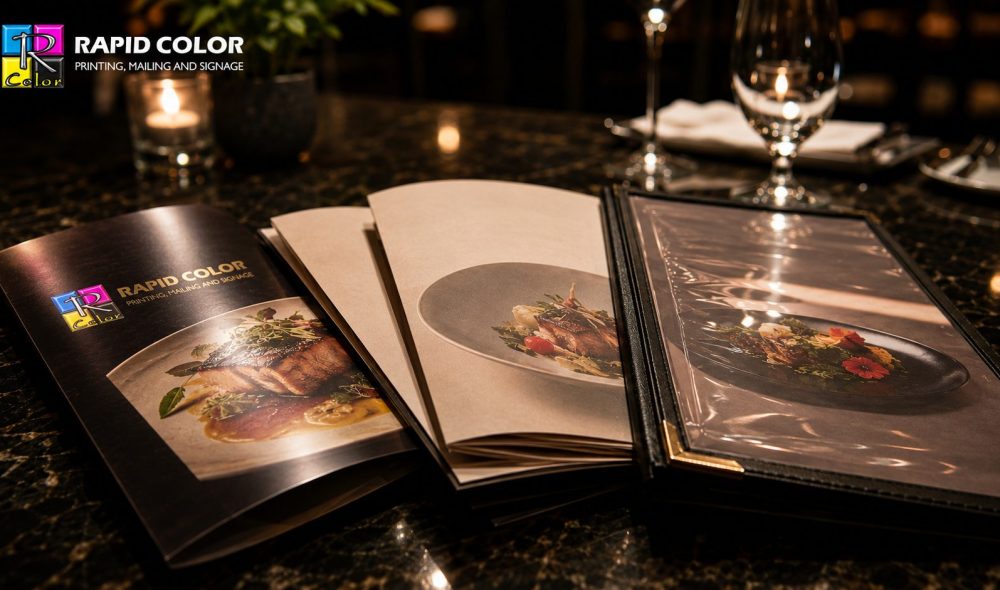
Your menu is the hardest-working sales tool in your restaurant, and quality restaurant menu printing turns that humble sheet of paper into a silent server that upsells, builds your brand, and shapes the entire dining experience. A beautifully designed and properly printed menu signals that you care about details and diners notice. From the paper a guest holds to the layout that guides their eye toward your most profitable dishes, every choice matters. For dependable professional printing in Las Vegas, Rapid Color helps restaurants produce menus that look as good as the food tastes.
This guide walks you through menu engineering, design principles, paper and coating options, sizing, and the durability factors that matter most for busy Las Vegas dining rooms. Whether you run a fine-dining establishment, a fast-casual concept, or a hotel buffet, the right approach to restaurant menu printing pays for itself in higher checks and a stronger brand.
Why Quality Restaurant Menu Printing Matters
A menu is the one marketing piece nearly every guest touches and reads from start to finish. Studies in menu psychology show diners spend only a couple of minutes scanning before they decide, which means your layout and presentation do a lot of persuading in a very short window. Cheap, flimsy, or poorly designed menus quietly undercut even the best kitchen. Investing in professional restaurant menu printing protects your brand at the exact moment a customer is deciding what – and how much – to order.
Beyond first impressions, durable restaurant menu printing reduces reprint costs, survives spills and heavy handling, and keeps your pricing and offerings consistent across every table. Quality restaurant menu printing is not an expense; it is one of the highest-return investments a restaurant can make. The difference between a generic office-printer sheet and a professionally produced piece is obvious the instant a guest picks it up.
Menu Engineering: Design That Sells
Menu engineering is the practice of arranging items so the dishes you most want to sell get the most attention. Smart menu design uses placement, visual cues, and pricing layout to nudge guests toward high-margin choices without feeling pushy. Before you finalize artwork for restaurant menu printing, map out which items deserve the spotlight. The most beautiful printing in the world cannot rescue a menu that buries its best dishes.
Think of this discipline as a partnership between strategy and production. The strategy decides what to feature; quality restaurant menu printing makes sure those features look irresistible on the page. When the two work together, your menu becomes a quiet, tireless salesperson.
Use the Golden Triangle
Readers’ eyes tend to land first on the center of a menu, then drift to the top-right and top-left corners a pattern called the golden triangle. Place your signature dishes and best margins in these prime zones. Boxing or shading a single “chef’s feature” item can lift its sales noticeably.
Mind Your Pricing Presentation
- Drop the dollar signs plain numbers feel less transactional and reduce price sensitivity.
- Avoid a straight column of right-aligned prices, which encourages bargain-hunting down the list.
- Use descriptive, appetite-building copy near higher-margin items to justify the value.
Keep It Scannable
Limit each category to a handful of items, use clear section headers, and leave breathing room between dishes. A cluttered menu overwhelms guests and slows down ordering. A clean layout with generous spacing reads as more upscale and helps servers turn tables faster.
| Want a menu that sells your best dishes? Rapid Color’s Las Vegas team prints crisp, vibrant menus on the paper and finish your concept deserves. Request a free quote and we’ll help you choose the perfect format. |
Paper and Coating Options
The stock you choose is the single biggest driver of how your menu feels and how long it lasts. The right paper stock balances appearance, durability, and budget, and it is one of the first decisions to settle when planning restaurant menu printing. A casual taco shop and a steakhouse have very different needs, so match the material to your concept and how often the menu is handled.
Paper stock comes in a wide range of weights and textures, from light coated sheets to rigid cover stocks. Heavier paper stock feels more premium and resists bending, while lighter weights keep costs down for menus you reprint often. Discuss your reprint frequency with your printer before locking in a stock.
| Paper / Stock | Feel & Durability | Best For |
| 100 lb gloss cover | Vibrant, wipeable | Fast-casual, daily menus |
| Uncoated 80 lb cover | Natural, premium touch | Fine dining, craft concepts |
| Synthetic / waterproof | Tear & spill proof | Outdoor, poolside, kids menus |
| Laminated cardstock | Rigid, long-lasting | High-traffic, reused menus |
Coatings and Finishes
A coating protects the surface and shapes the mood. Gloss coating makes food photography pop and wipes clean, which is ideal for high-volume venues. Matte and soft-touch finishes feel refined and reduce glare under restaurant lighting, a favorite for upscale rooms. For menus handled at every seating, laminated menus add a rigid, sealed surface that resists grease, water, and fingerprints, extending the life of each piece dramatically.
When to Choose Laminated Menus
- High-turnover venues where menus are reused dozens of times a day.
- Poolside, patio, and outdoor seating exposed to moisture and sun.
- Family restaurants where spills and sticky fingers are part of service.
Lamination is not just protective; thicker laminated menus also feel substantial and premium in a guest’s hands. The trade-off is that laminated pieces cannot be edited, so they suit stable menus rather than daily specials.
Sizing and Format Choices
Menu format affects readability, table space, and printing cost. There is no single correct size – the best choice depends on how many items you offer and the look you want. Common formats for restaurant menu printing range from single sheets to multi-panel folders, and each carries its own production considerations.
Format also influences how you handle updates. A concept with seasonal dishes benefits from a flexible layout, while a stable menu can commit to a richer, multi-page presentation. Decide how often your offerings change before you commit your restaurant menu printing to a fixed format.
Popular Menu Formats
- Single-page (8.5×11 or 8.5×14): simple, fast to reprint, ideal for focused menus and daily specials.
- Bi-fold or tri-fold: organizes appetizers, entrees, and drinks into clear sections; folds compactly.
- Folder or booklet: best for large menus, wine lists, and multi-page fine-dining presentations.
- Table tents and inserts: perfect for promoting specials, desserts, and seasonal items.
If your offerings change often, consider a durable cover with replaceable printed inserts. This keeps your premium presentation while letting you swap pages cheaply – a smart middle ground that controls long-term menu printing costs.
Durability for Busy Las Vegas Restaurants
Las Vegas dining rooms run hard. Between high tourist volume, late-night service, and outdoor patios in desert heat, menus take a beating. Choosing materials built for that reality keeps your menus looking sharp and saves money on reprints. When you plan restaurant menu printing for a high-traffic venue, durability should weigh as heavily as appearance.
Tips to Extend Menu Life
- Choose a thicker paper stock or lamination for menus handled at every table turn.
- Opt for synthetic, waterproof material for any seating exposed to sun, wind, or water.
- Round the corners to prevent the bent, dog-eared look that signals wear.
- Keep a digital master file so reprints are fast, consistent, and on-brand.
Color, Branding, and Food Photography
Color does heavy lifting on a menu. Warm tones like red and orange are associated with appetite and energy, which is why so many restaurants use them as accents. Your brand palette should carry through every piece of restaurant menu printing so the menu feels like a natural extension of your signage, website, and packaging. Consistency builds recognition and trust before the first bite.
Food photography can be powerful, but only when it is excellent. A single, professionally shot hero image of a signature dish often outperforms a grid of mediocre photos. If you cannot invest in great photography, elegant typography and descriptive copy may sell better than weak images. Whatever you choose, make sure your printer prints in full CMYK at 300 DPI so colors stay rich and accurate across the run a detail that separates professional restaurant menu printing from a quick copy-shop job.
Color Tips for Print
- Design in CMYK, not RGB, so on-screen colors match the printed result.
- Keep dark text on light backgrounds for readability under dim restaurant lighting.
- Use brand accent colors sparingly to highlight sections and featured dishes.
Common Restaurant Menu Printing Mistakes
Even great restaurants stumble on a few avoidable errors. Knowing them in advance saves money and protects your brand. Before you approve any restaurant menu printing job, run through this short checklist with fresh eyes – ideally someone outside your team.
1. Skipping proofreading: a single typo or wrong price can cost you all day, every service.
2. Choosing stock too thin: flimsy menus feel cheap and wear out within weeks.
3. Ignoring bleed and margins: text or color cut off at the edge ruins an otherwise clean design.
4. Overcrowding the page: too many items overwhelm guests and bury your best sellers.
5. Forgetting durability: menus handled all day need lamination or synthetic stock to survive.
A reputable print partner will catch many of these issues during prepress, but the final responsibility is yours. Reviewing a physical proof before the full run is the cheapest insurance in all of restaurant menu printing.
| Need menus that survive a Las Vegas rush? From waterproof stocks to premium lamination, Rapid Color prints menus built to last. Contact our print team for samples and expert recommendations. |
Bringing It All Together
Your menu is too important to leave to a desktop printer or a rushed template. Thoughtful menu engineering steers guests toward your most profitable dishes, clean menu design makes the experience effortless, and the right paper and coating protect your brand through every service. Match your format and durability to how your menus are actually used, keep your artwork print-ready, and partner with a local printer who understands food-service realities. Done right, restaurant menu printing delivers a polished, durable centerpiece that quietly works every shift to lift your average check and reinforce the quality your kitchen already delivers.
Frequently Asked Questions
What is the best paper for restaurant menu printing?
It depends on use: gloss cover suits daily menus, uncoated stock feels upscale, and synthetic or laminated paper resists spills for high-traffic dining rooms.
Should restaurant menus be laminated?
Laminate menus that are reused often or exposed to spills and weather. Laminated menus last far longer but cannot be edited, so use them for stable offerings.
What size should a restaurant menu be?
Single-page 8.5×11 or 8.5×14 works for focused menus, while bi-fold, tri-fold, or booklet formats suit larger offerings and fine-dining presentations.
How does menu design affect sales?
Strategic menu design uses placement, spacing, and pricing layout to guide guests toward high-margin dishes, often raising average check size noticeably.
How often should I reprint my menu?
Reprint whenever prices or items change, or when menus look worn. Durable stock and replaceable inserts reduce how often full reprints are needed.
Can I print menus with my own design?
Yes. Supply a print-ready CMYK PDF at 300 DPI with bleed, and a professional printer will match colors and recommend the best paper and finish.
Where can I get restaurant menus printed in Las Vegas?
Rapid Color provides full-service menu printing in Las Vegas, including design support, premium paper, lamination, and fast local turnaround for restaurants.